

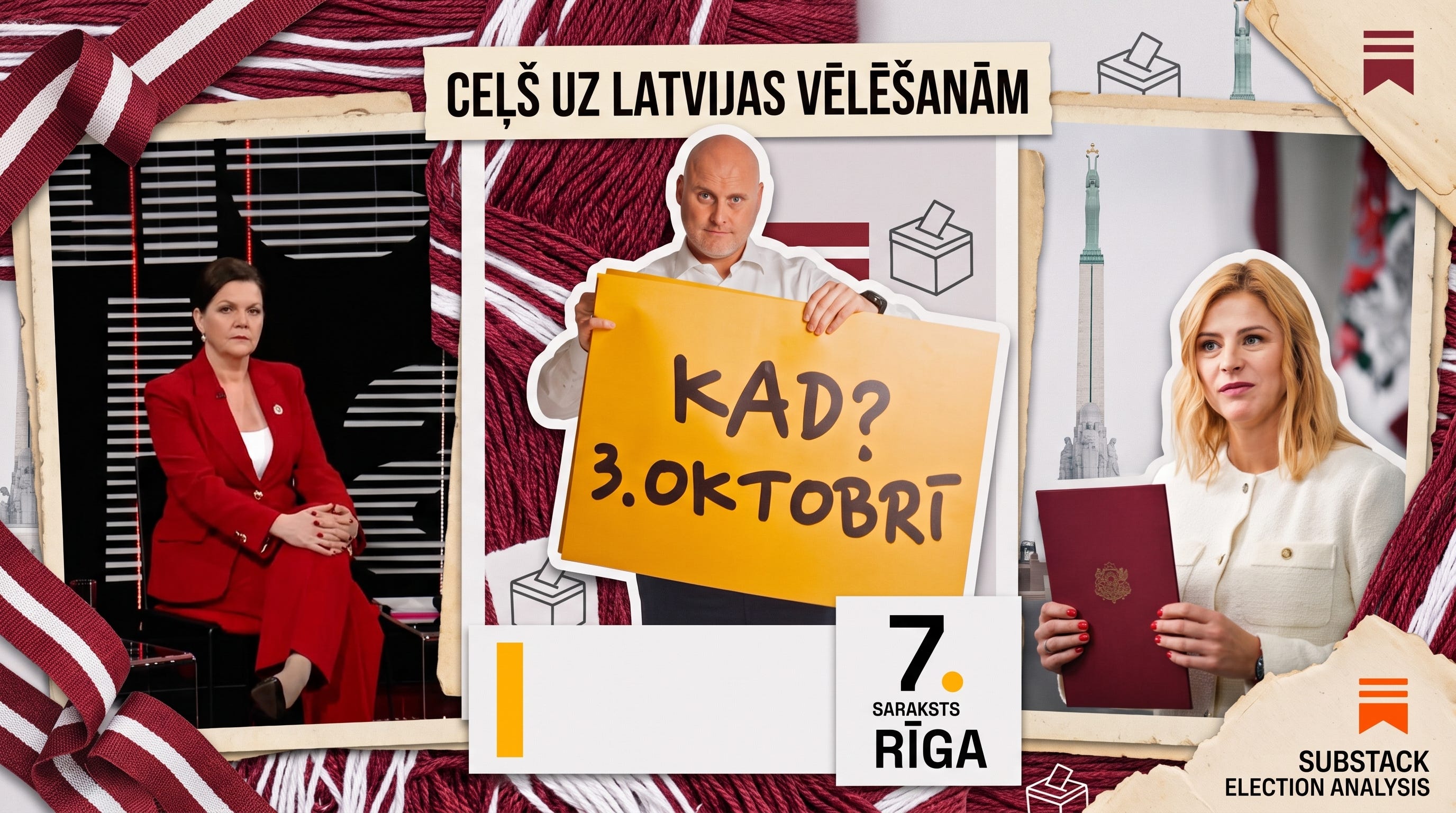
Latvians will head for elections this Sunday. What’s at stake, which party is on the rise and who might fall below the threshold? What about Violet Fairy? Baltic Flank’s frequent co-author Sanita Jemberga helps us walk through Latvia’s notoriously chaotic political scene.
***
I’ve heard this question from various audiences ahead of Latvia’s parliamentary election this Saturday, October 3rd. The answer: to some extent, yes. But a true Latvian disclaimer is in order — it could have been worse.
Fourteen parties and lists are vying for 100 seats. That’s five parties fewer than last time. Already, that’s progress. The field breaks into four broad categories.
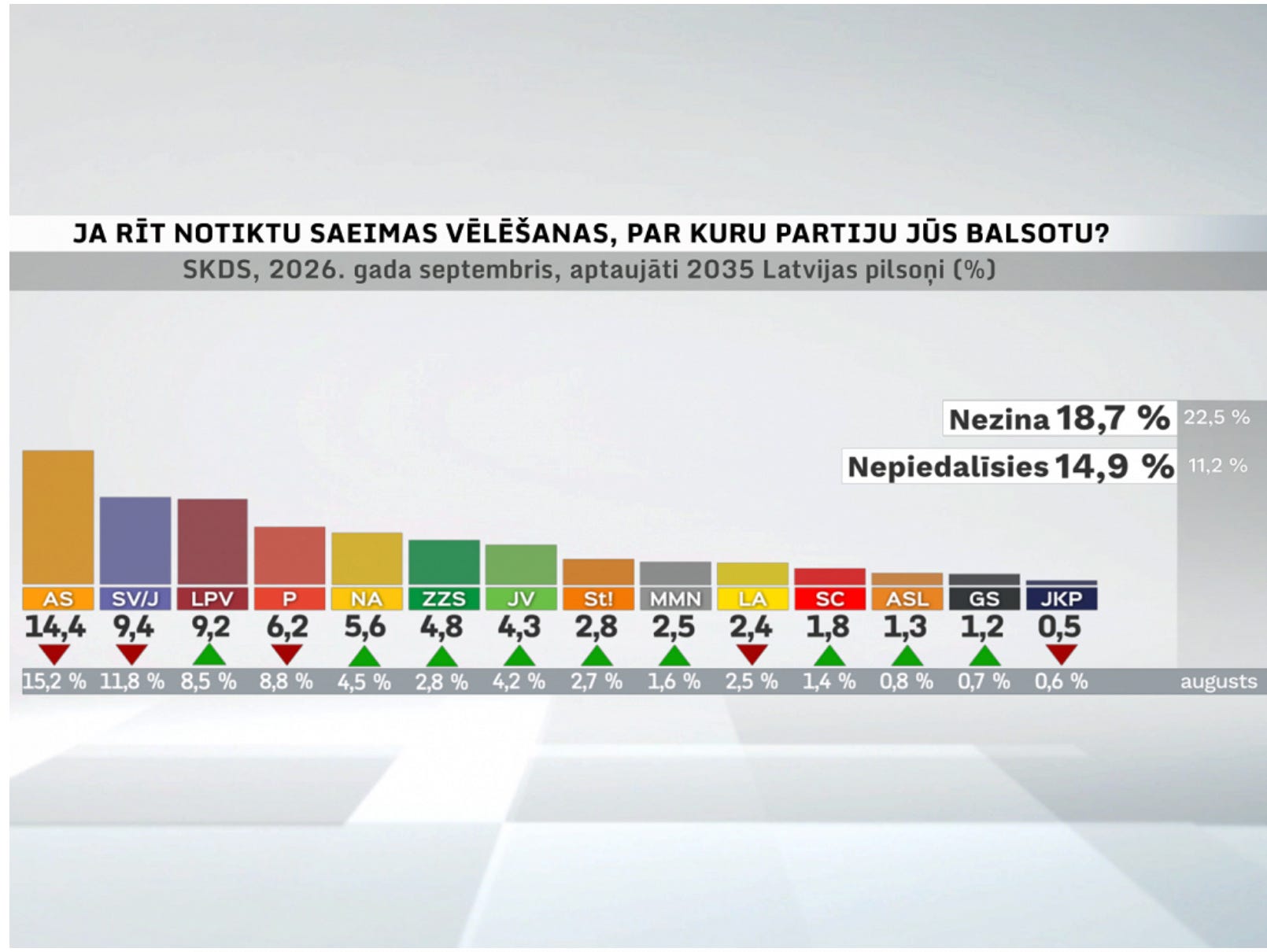
The current conservative-center right coalition
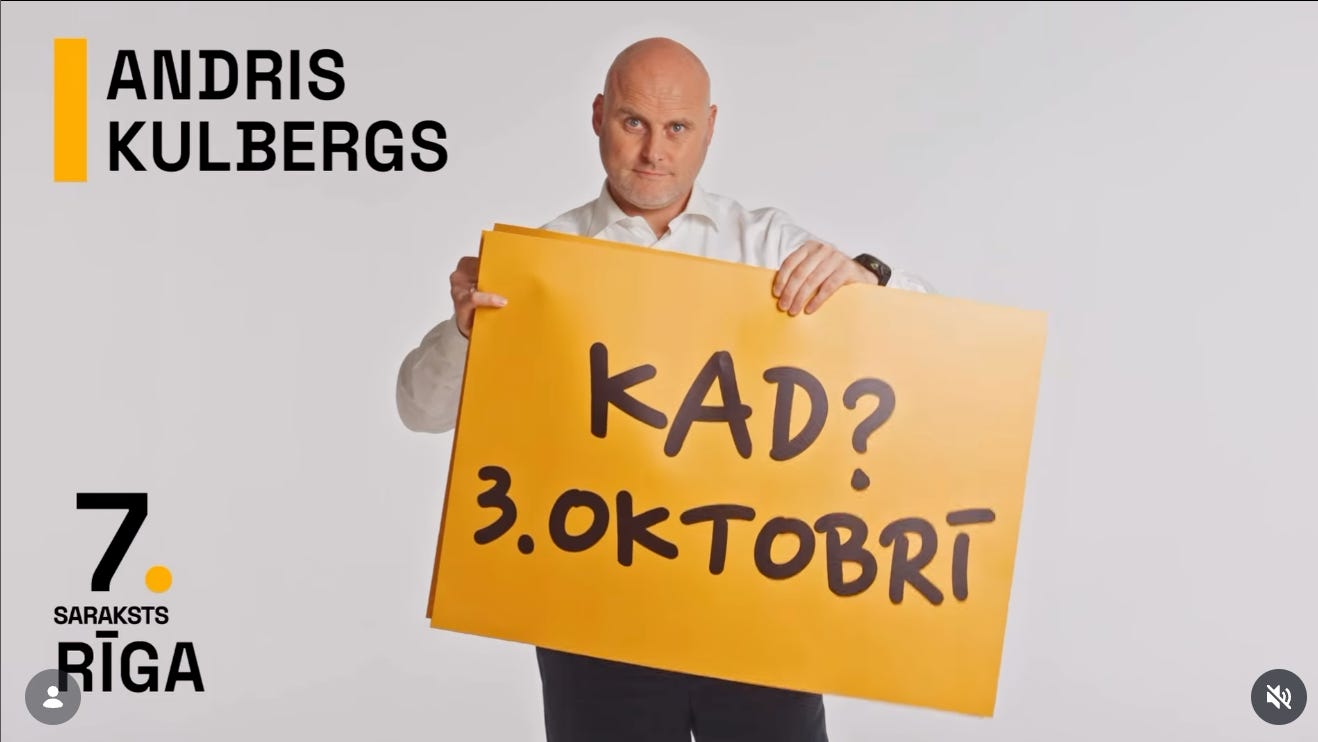
There’s little doubt the election will be won by the United List (AS) and its rocket-in-ascent, Andris Kulbergs — a scenario that would’ve been called wild not long ago. After New Unity’s (JV) PM Evika Siliņa badly miscalculated and brought down her own government in May, ending the party’s 17-year dominance, opposition MP Kulbergs — with no ministerial experience — gambled on assembling a coalition with less than half a year to prove itself.
Turns out people like his daily social-media updates, business-minded pitch, and straight-talker image, even if he hasn’t actually done much. Thanks to him, AS now leads the polls. Ask voters to name others on the list, though, and few can. Hiding behind him is a colourful bunch, united mainly by appetite for power rather than conviction.
The Greens and Farmers’ Union and New Unity are hovering dangerously close to the five-percent threshold. It is a striking reversal for two legacy parties that governed for better half of two decades. Both look tired and are blamed for a country many feel is drifting economically compared to fast-growing Lithuania or wealthier Estonia, not helped by Kulberg’s manic energy. I suspect both will scrape in — in polls nearly 18% remain undecided — but can forget their former glory or influence.
The fourth governing party — and the most right-wing — National Alliance (NA), has lost much of the support it enjoyed at its 2014 peak, driven by Russia’s invasion of Crimea. Still, it can count on a loyal nationalist base worth just under ten percent. A rise there would signal growing appetite for tougher anti-migration policy as exaggerated migration fears were central to NA’s campaign.
The Russian-language vote
Harmony, which long dominated this space before condemning Russia’s war and losing it, is a shadow of itself — and likely finished. If Russians here in 2022 elections felt bewildered by the invasion of Ukraine, many now line up behind Jūlija Stepaņenko, Sovereign Power’s (SV) leader. If the Kremlin is betting, she’s the favourite. To pick up Latvian votes too, she’s teamed with disinformation spreaders from “Jaunlatvieši” — an unholy alliance wreaking havoc in Riga City Council since 2025, their first taste of power. SV now holds seats in seven municipalities, though the Stepaņenkos — a political couple, husband also running — have been in politics far longer.
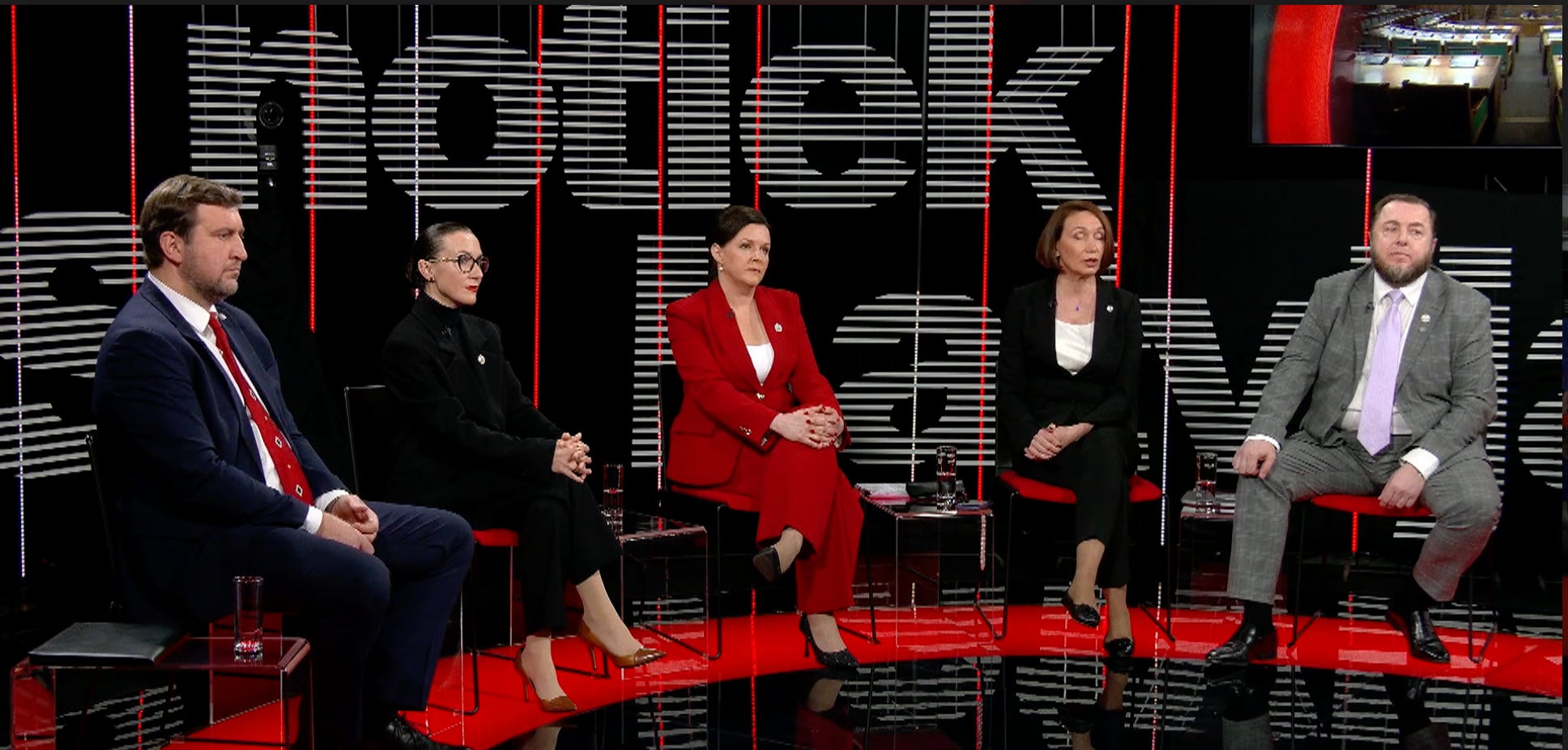
Hard-working, social-media savvy, speaking impeccable Latvian and campaigning on “family values” and communal issues, she’s known online as the Violet Fairy after her party’s colours (although I’d prefer Red Yulia). She has constantly refused to condemn Russia’s actions in Ukraine and pledged to end Latvia’s military and financial support there, aid to refugees excepted. A scandal over her absent father in Russia — a war supporter who’s gifted her close to half a million euros, fuelling Kremlin-conduit speculation — won’t hurt her; her voters may wear it as a badge of honour.
The previous champion of this vote, For Stability!, lurks below five percent, having disintegrated after its leader fled to Minsk to dodge trial for inciting ethnic hatred. Politically it’s barely distinguishable from SV. It may still crawl in — Russian-speakers are notorious for hiding their true colours in polls. None of it matters much, though: every party, populist LPV included, rules out working with both over their pro-Russian stance.
Ainārs Šlesers — one of Latvia’s original three oligarchs — and his LPV are also chasing part of the Russian vote. A gifted populist, he’s the only Latvian politician who’s dented a bloc split almost entirely by language. Money-minded and business-tied as he is, Šlesers held one line all campaign: Russia must be condemned, and Latvian remains the sole state language. Yet he resisted symbolic moves like NA’s push to strip Russian lettering off Riga’s only Russian theatre, campaigning instead on national unity. However, his stronghold is angry Latvians (and his big business friends in banking and real estate).
LPV took just over six percent last time, spending their time in opposition (and on social media). Now polling in the top three, its presence in parliament could be formidable. Riga has buzzed for weeks over whether Kulbergs would bring LPV into government – after all, the two aren’t so different, both business- rather than values-driven. For now, he says no, citing LPV’s past alliance with Stepaņenko, pro-Kremlin figures on its list, and promises to voters the state budget could never cover. But Latvian politics has taught us that red lines tend to move once mandate counts are on the table.
What’s left
The Progressives occupy the left-wing niche almost alone – Soviet memory makes Latvians wary of “leftist” branding, even though issue-by-issue polling often shows they long for social democracy. They’ll capture the youth vote, but everyone else works to shut them out as genuine competition. Their one stint in government, under Siliņa, exposed their real weakness: actually getting things done.
Upcoming and home-coming
Latvians reliably deliver a protest vote (30–39% of seats went to newcomers in the last two parliaments). It’s going to be smaller this time. Two parties qualify: supernationalist “Rising Sun for Latvia,” and “We Are Changing the Order,” led by renowned theatre director Alvis Hermanis, whose founders splintered before the list was even finalised and now resembles the eclectic troupe. I’d add “Latvijas attīstībai” here — liberal, business-minded, missed entering parliament last time by roughly 250 (!) votes. Below the line again, but with this many undecided, who knows.
So, Trumpland?
Right now the likely scenario is the current coalition holding on after the elections, with Kulberg’s party growing stronger. On Ukraine support, Russia sanctions, defence spending and EU membership, nothing changes — bar perhaps the “Green Deal”, which Kulbergs hates.
But worrying signs exist. As opposition, AS was among those pushing withdrawal from the Istanbul Convention against domestic violence, sparking mass protests (Kulbergs now says Latvia should stay, though not his whole party agrees). While in government, his MPs backed an LPV proposal to enshrine two biological sexes in the Constitution, over coalition partner JV’s objections (just a proposal, not law yet). He’s picked an unnecessary, weeks-long fight with NGOs over state funding for meagre savings, while doing nothing to close an €800 million budget gap of unfunded promises. He hasn’t touched judiciary or media independence, though the last NA would love to. It’s a good sign.
Another good sign: state security service (VDD) reports no notable Russian interference in this election; our fact-checkers who by now practically live in online disinformation space agree. So if new election IT systems and collective sanity hold, we should be fine. We’ll know Saturday night — exit polls after 8pm, results usually clear past midnight. If nothing goes wrong.
That’s it for this time! Thank you for reading and please stay tuned for next updates from the Baltic Flank! It’s going to be a busy few weeks. Sanita will give us an after-elections snap analysis, I will bring you the best bits of my upcoming live on-stage interview with Estonian’s foreign intelligence chief and there are several updates about Russian interference operations that I am preparing for you.
In case you haven’t already, please sign up in order not to miss our next dispatches!
Greetings from Tallinn
Holger
