


Drone explosions, high-level arrests and the government’s collapse rocked Latvia over the last 10 days. Here, my colleague Sanita Jemberga writes what is going on and what to expect next.
***
“What on earth was that?” was the question many Latvians asked last week after witnessing one of the dumbest government collapses I can recall in more than 30 years in journalism.
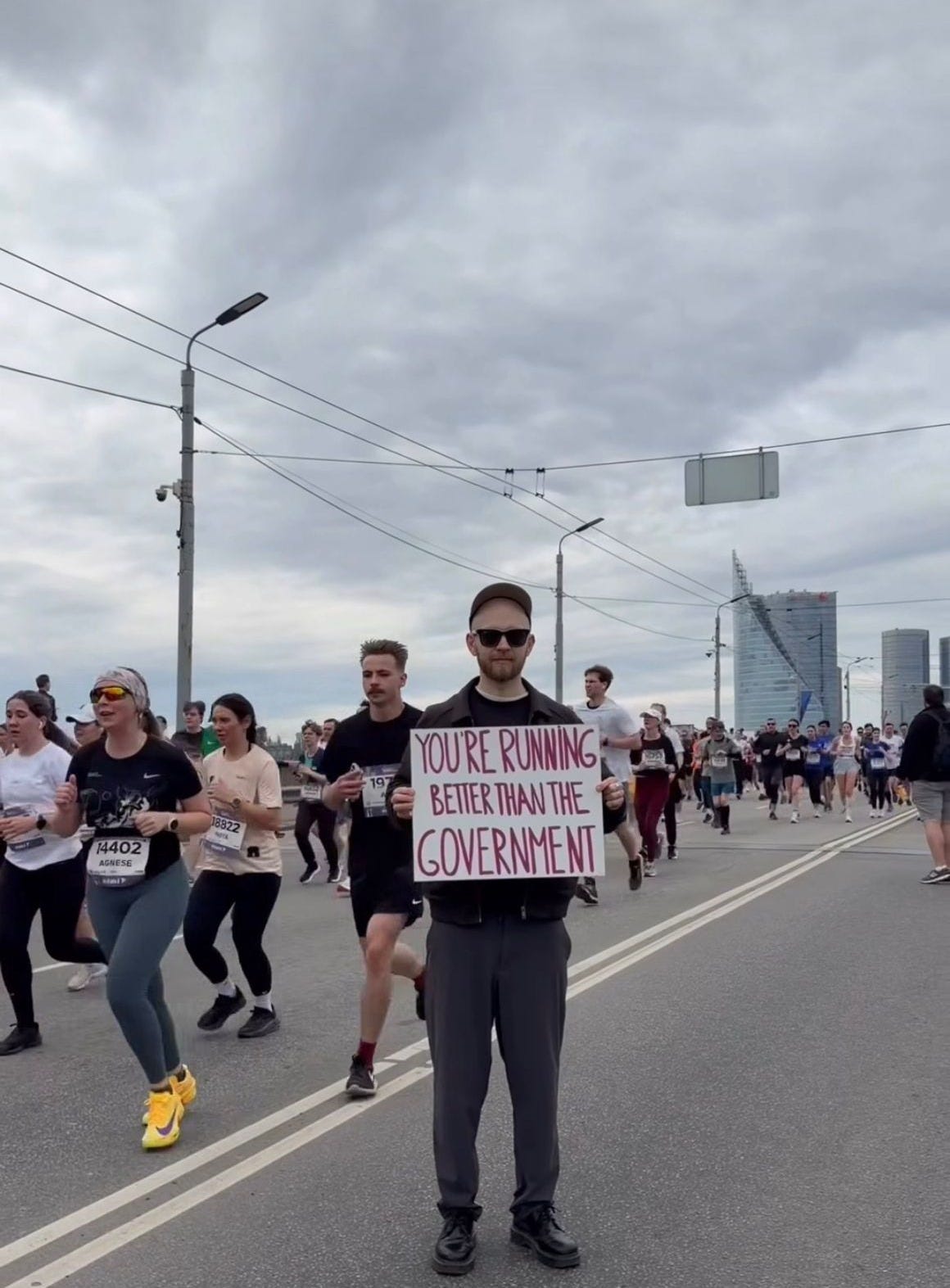
I am writing this dispatch on Sunday from a café next to the Freedom Monument while waiting for my youngest to finish his 6K run in the Riga Marathon (around 46,000 people registered this year).
Earlier this morning, shortly after 6 a.m., the National Armed Forces sent out an email warning about a possible drone threat in eastern Latvia. Had I been in one of the five regions bordering Russia, I would also have received an SMS alert instructing residents to stay indoors and await further instructions. Shortly before 8 a.m., the threat was called off. One drone had entered Latvian airspace and then left without incident — this time.
It was at least the fifth warning of this kind this month. We are getting used to the fact that when Ukrainian drones attack ports or strategic targets in St Petersburg, Moscow or elsewhere near our border, some may end up crashing here. Ukrainians blame Russian electronic warfare systems for the deviations and have offered expertise in dealing with stray drones. Latvians still strongly support Ukraine and seem to be informed in advance about upcoming attacks — at least enough for NATO jets to be scrambled to protect our airspace — but public opinion could shift quickly if the drones start costing lives.
It came close more than a week ago, when two drones crashed into an empty oil depot in the border city of Rēzekne. According to some experts, they may have been guided by AI systems that seek visual similarities in targets and therefore fail to distinguish between Russian and Latvian infrastructure. While people here tend to stay calm — drones have also fallen or crossed into Estonia, Lithuania, Finland and elsewhere — this incident created too much uncertainty.
How many drones were there? Initially, authorities thought one had crashed while another was still missing; later, the army commander explained that radar systems had not detected them in flight at all.
Why weren’t they shot down? Allegedly because the military feared that missed shots could hit civilians in the city below.
Why were residents not alerted immediately? What are the protocols for schools? Why were road workers still outside while the alert remained active?
In the end, many concluded that no real lessons had been learned from the first major drone incident in September 2024 — and that spending 5% of GDP on defence was not buying the protection people expected.
And at precisely that moment, Prime Minister Evika Siliņa (New Unity) decided to get rid of Defence Minister Andris Sprūds (The Progressives).
But that was not the reason. It was the pretext.
The Progressives – currently Latvia’s third most popular party and the only semi-left force in an otherwise conservative and right-wing political landscape – entered government for the first time in 2023. They demanded and received the “heavy” ministries: defence, transport and culture (the latter traditionally useful for boosting ratings).
As it turned out, they were better at PR than governance. With parliamentary elections approaching in October, the coalition increasingly resembled a car without a driver. MPs from the coalition’s third partner, the Greens and Farmers Union, were supporting no-confidence motions against Progressive ministers or voting against other important issues. Urgent decisions were postponed. In a sluggish economy, with a war raging not far from our borders, the paralysis became too much.
That was the moment when Siliņa seemingly convinced herself that sacrificing Sprūds might save her. Opposition parties had already submitted a no-confidence motion against him, and she apparently hoped that by giving them his scalp, they would either support her government or agree to form a new coalition under her leadership.
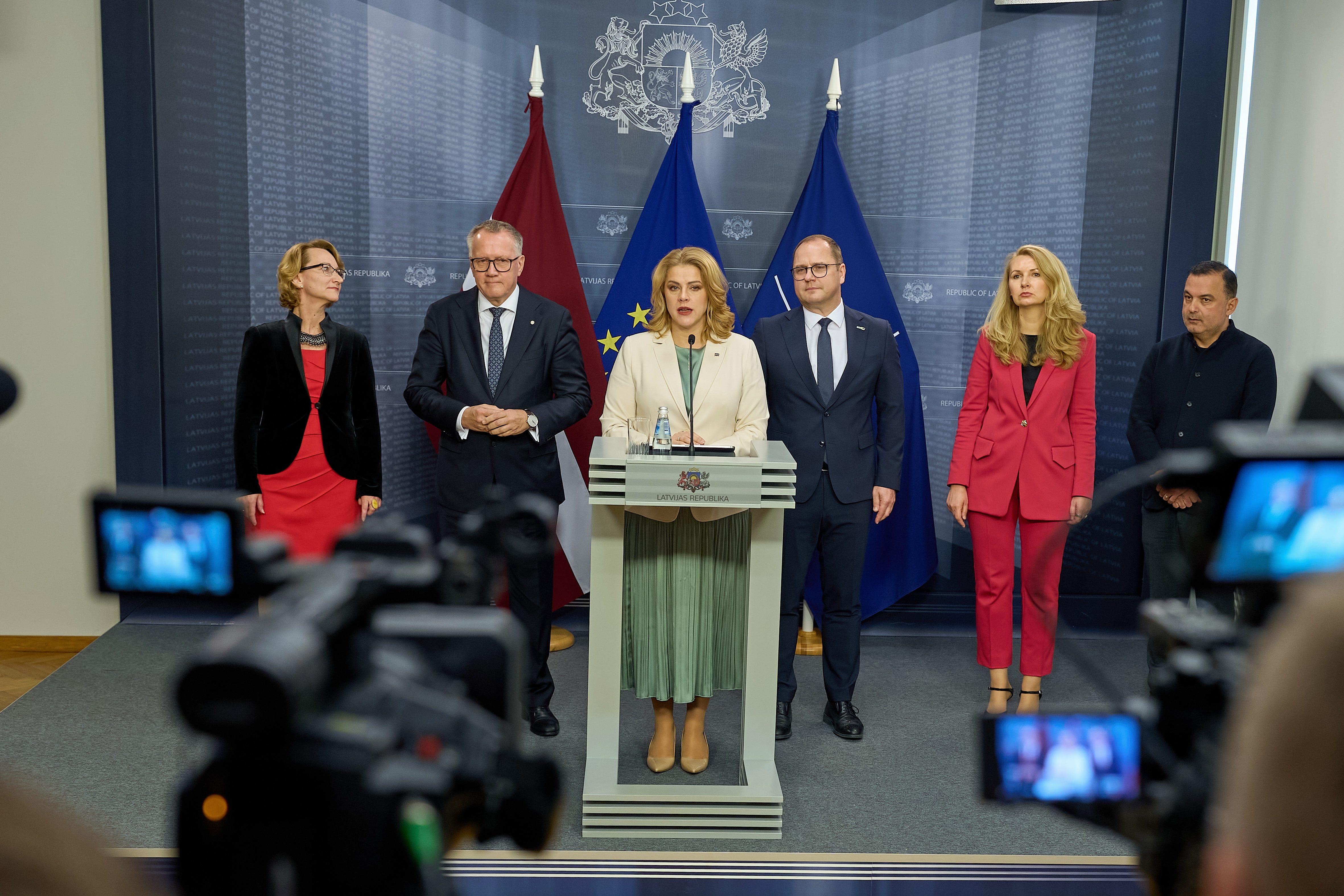
In secret, she had asked her adviser — Colonel Raivis Melnis, the Defence Ministry’s representative in Ukraine — to become defence minister.
But the plan was disastrously miscalculated.
Sprūds resigned on his own terms, saying he wanted to prevent the armed forces from being dragged into political battles. The Progressives immediately announced they no longer supported the prime minister. Siliņa had failed to secure 51 votes in parliament before asking Melnis to take off his uniform and enter politics. Both opposition parties — the National Alliance and the United List – quickly declared they would not work under Unity or her leadership.
In practical terms, Siliņa no longer had a parliamentary majority.
The coalition had long survived under the slogan that “nothing better can be assembled in this parliament.” We are now about to find out whether that was true.
On Saturday, President Edgars Rinkēvičs invited Andris Kulbergs (United List) to try to form a government, giving him ten days to do so. The president signalled that he would prefer a broad coalition – essentially everyone except the populists and Kremlin sympathisers.
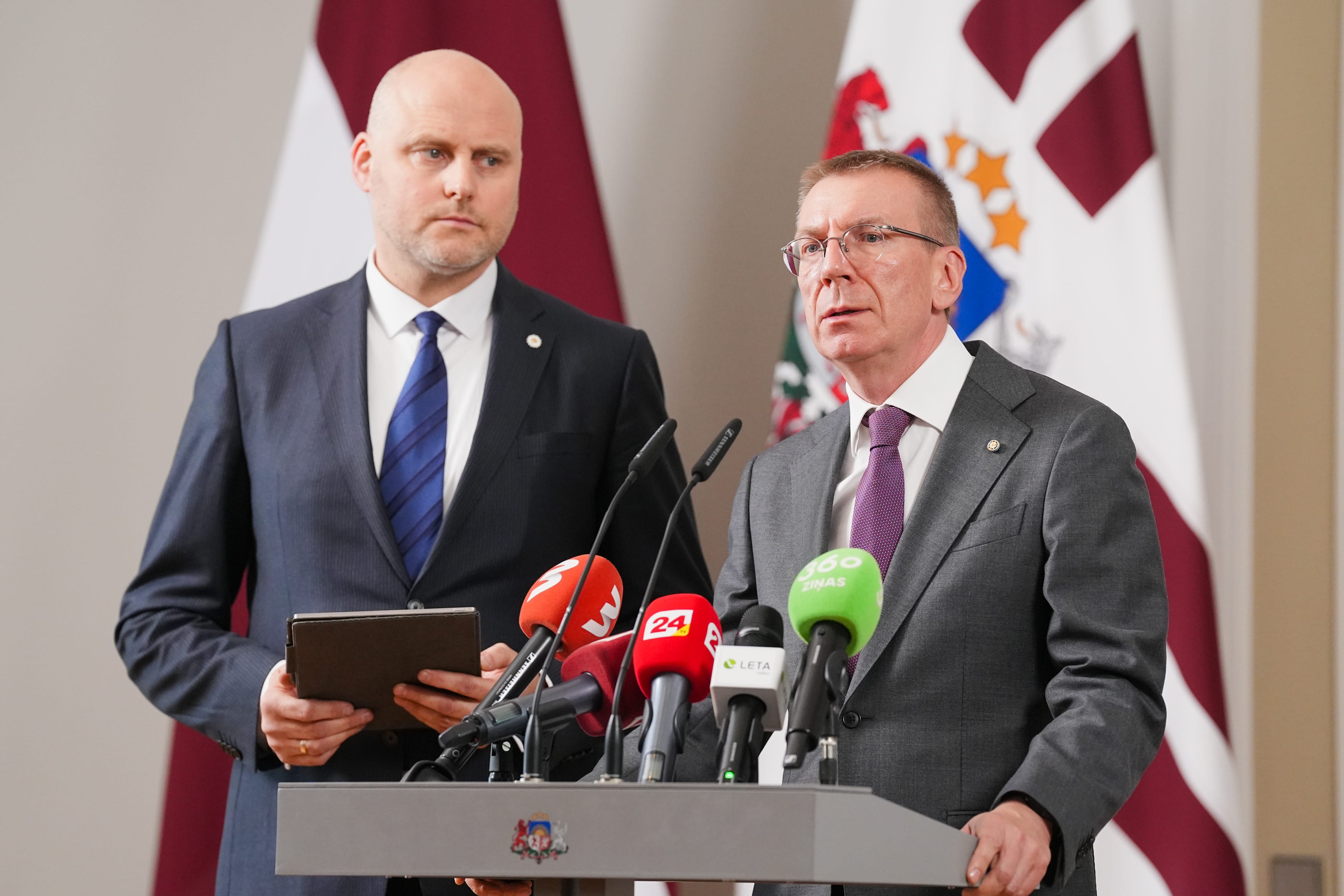
Rinkēvičs justified his choice by arguing that the United List is the largest opposition party and therefore deserves the opportunity. In reality, New Unity could hardly be nominated after blowing up its own government, while the Greens and Farmers Union has been crippled by a fresh criminal case involving its agriculture minister, who is accused of securing state financial support for timber companies that apparently did not need it.
So who is Kulbergs?
One of the country’s most outspoken petrolheads, he survived a serious car crash and later campaigned — while using a wheelchair and crutches — for better infrastructure for people with limited mobility. He joined the United List and entered parliament in 2022. There, he did solid (and loud) work in parliamentary investigative committees into Rail Baltica and inflated utility prices, while simultaneously earning criticism for spreading disinformation on other issues.
Got a hint? Find me on Signal at holgerroonemaa.30.
He is also a notorious hothead who probably should not be allowed near social media when angry. During protests against Latvia’s withdrawal from the Istanbul Convention, attended by around 10,000 people, he threatened to spit in the face of one of the leaders of Latvia’s independence movement after the veteran politician spoke at the rally.
He also has no government experience.
So what happens next?
If Kulbergs fails to secure 51 votes, Rinkēvičs may invite someone else to try to form a government. Alternatively, Siliņa’s ministers could limp on as a technical minority government until the October elections.
That would be a terrible option. Difficult decisions are looming over the rescue of the struggling national airline and whether Rail Baltica can still be built on time.
Not to mention that someone still has to govern the country — and protect it from drones, and from Russia.
Thank you for reading the latest dispatch of the Baltic Flank! As always, if you liked what you read, please consider subscribing to receive our freshest updates.
We will be back with more updates soon!
Holger and Sanita